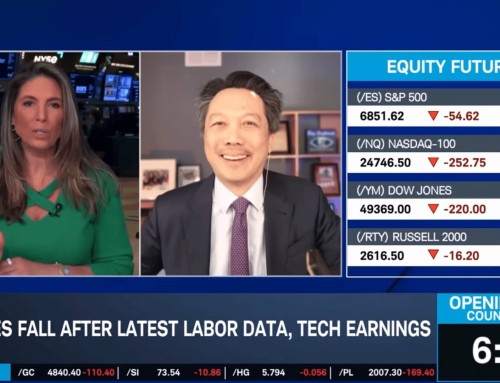
Andy Wang, Managing Partner at Runnymede Capital Management, appeared on Trading 360 with Marley Kayden to discuss Delta Air Lines’ (DAL) latest earnings report. He was joined by Jarrett Bilous, Transportation, Aerospace & Defense analyst at S&P Global Ratings, for a panel discussion on what the results signal for demand, costs, and forward guidance.
A Solid Quarter Despite External Headwinds
Delta’s quarterly results were broadly solid. The company reported earnings of $1.55 per share, in line with expectations, while revenue of approximately $16 billion exceeded consensus estimates by more than $300 million. Notably, unit revenue was essentially flat, which Andy highlighted as a constructive outcome given the impact of the recent government shutdown.
“That tells us operations held up well even with a temporary external headwind,” Andy said, pointing to consistent execution across the business.
Guidance Is Driving the Market Reaction
While the quarter itself showed no execution issues, the stock reaction reflected investor focus on forward guidance. Delta introduced 2026 earnings guidance of $6.50 to $7.50 per share, and the midpoint came in slightly below prior expectations. Following the release, shares traded down roughly 3%.
“The market reaction is really about guidance,” Andy explained. “After a strong rally in the stock, expectations were high, so even a modest reset matters.”
Even so, the outlook still implies roughly 20% earnings growth, underscoring that management remains constructive on the business trajectory.
Demand Remains Healthy as Pricing Normalizes
Both panelists pointed to encouraging demand trends. Delta is guiding to 5–7% revenue growth in the March quarter, and management noted accelerating bookings across consumer, corporate, and international travel.
“Demand does not look weak,” Andy said. “The challenge is that as fuel costs fall and capacity rises, airlines have less pricing leverage.”
This suggests growth is becoming more volume-driven rather than pricing-led.
Margins and Costs Are the Key Swing Factors
Looking ahead, margins remain the key variable for investors. Fuel costs are expected to provide a tailwind, but non-fuel costs are still rising in the low single digits, and Delta plans approximately 3% capacity growth in 2026.
“If cost discipline slips, earnings growth can fall short even with solid demand,” Andy noted, reinforcing why expense management remains central to the investment debate.
Cash Flow and Loyalty Provide Longer-Term Support
From a longer-term perspective, Delta’s cash flow profile stands out. The company generated $4.6 billion in free cash flow in 2025 and expects $3 to $4 billion in 2026. In addition, its SkyMiles and American Express partnership continues to provide a stable and recurring source of earnings.
“That steady cash generation is why many investors view Delta as more resilient than its peers,” Andy said.
Bottom Line
Delta’s earnings reflected solid execution and healthy demand trends, while guidance and cost dynamics drove near-term market reaction. As discussed on Trading 360, the fundamentals remain intact, but margins, capacity, and pricing power will be critical factors to watch going forward.
Watch the segment: https://schwabnetwork.com/video/delta-airlines-dal-earnings-fuel-costs-capacity-vs-premium-demand