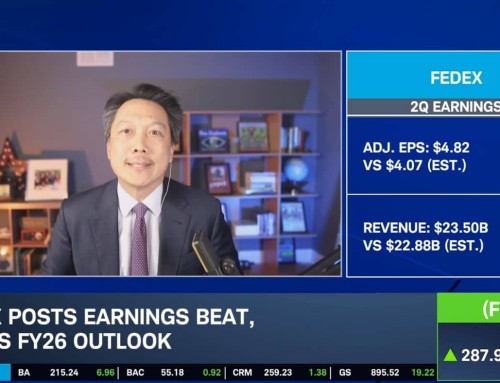
In a recent appearance on Schwab Network's the Market on Close with Marley Kayden and Sam Vadas, Chris Wang provided expert insights on the government shutdown and AI bubble risk.
3 Positives:
- Historical Market Resilience and Post-Shutdown Gains: The S&P 500 has been, on average, flat or shown a small gain during shutdowns since 1976, and has risen during every shutdown since 1990. Long-term performance is also positive, with the S&P 500 historically being higher on average in the 12 months following a shutdown.
- Focus on Broader Macroeconomic and Earnings Factors: Investors tend to overlook the political drama of brief shutdowns and focus on more impactful underlying factors such as strong S&P earnings growth expected in 2025 and 2026 ( and , respectively), potential future Fed rate cuts, and the tailwinds from deregulation and AI (e.g., OpenAI's projected growth).
- Potential for Dovish Fed Action: If government spending cuts and potential mass layoffs (as suggested by the Russell Vought context) significantly impact the job market, it could lead to a more dovish Federal Reserve, which could push more money into risk assets (especially if the risk-free rate falls toward ).
3 Negatives:
- Increased Volatility and Pre-Shutdown Corrections: Markets can experience heightened volatility during the initial days of a shutdown, and in the period immediately preceding a long shutdown (like the 35-day one), significant corrections can occur (e.g., a S&P 500 correction in the 12 days before the longest shutdown).
- Negative Impact on Economic Growth (GDP): Longer or full shutdowns can have a measurable impact on the economy. The 35-day partial shutdown in 2018-2019 shaved about 40 basis points of GDP growth, while the 16-day full shutdown in 2013 shaved 60 basis points of GDP growth.
- Risk of a “This Time is Different” Scenario: This shutdown context is framed as potentially different due to proposed large-scale spending cuts, potential mass firings, and a political strategy of “shock and awe,” which could lead to a more prolonged period of market uncertainty and a potential shift away from market resilience toward safe-haven assets.