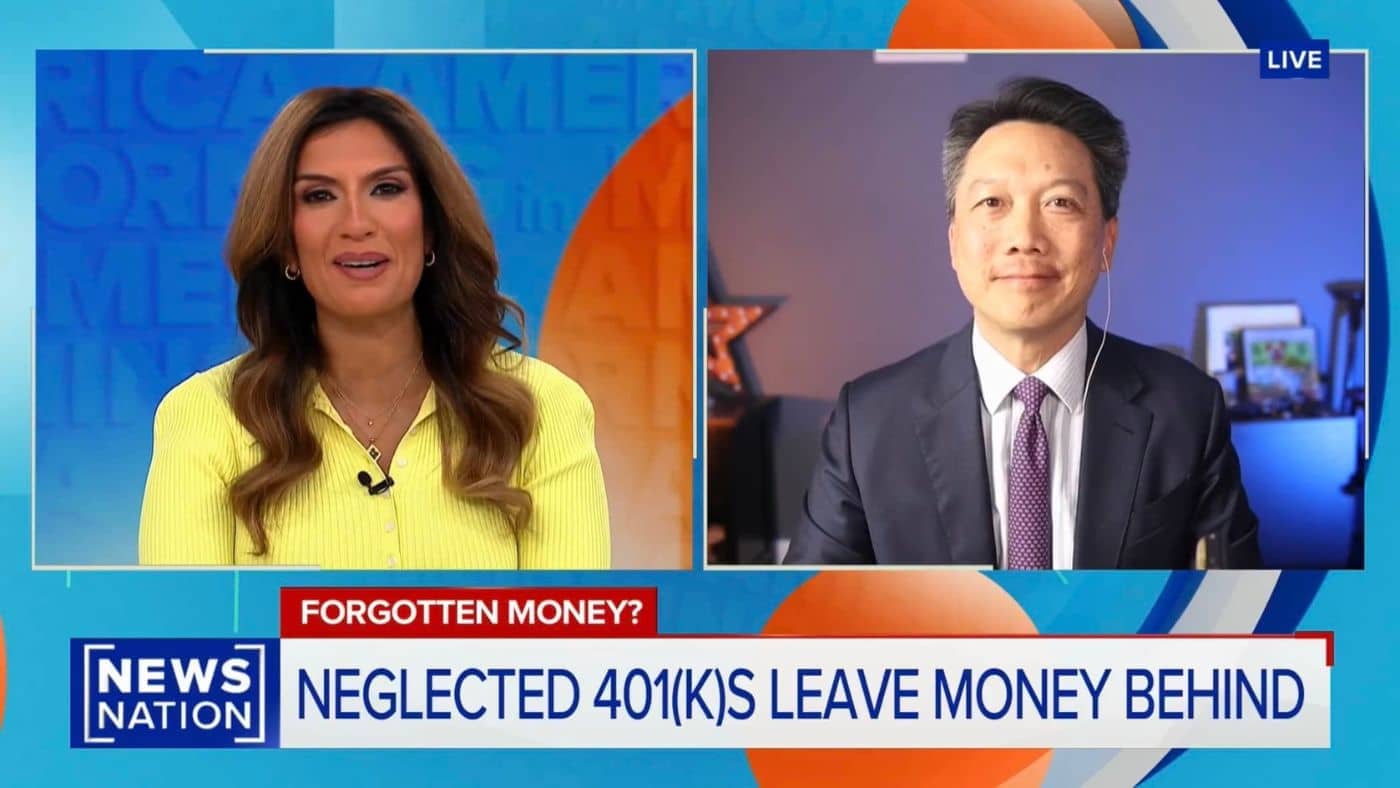
Millions of Americans are unknowingly leaving retirement dollars behind every time they change jobs. During a recent appearance on NewsNation, Andy Wang, Managing Partner at Runnymede Capital Management and host of the Inspired Money podcast, broke down the growing problem of forgotten 401(k) accounts and the hidden impact of safe harbor IRAs.
With the average American now changing jobs 10 to 15 times in a career, it’s easier than ever to lose track of old retirement accounts. Life gets busy. Companies merge. HR contacts disappear.
And a forgotten 401(k) can quietly cost you tens, or even hundreds, of thousands of dollars in long-term growth.
Why So Many People Lose Track of Their 401(k)s
Andy put it simply on NewsNation:
“People get busy with life, especially when changing jobs. They forget about an old 401(k). They forget to manage it. They forget where it is.”
Workers often assume their old account continues investing where they left it.
But increasingly, that’s not what happens.
The Hidden Problem: Safe Harbor IRAs
Under federal rules, employers are allowed to automatically transfer small 401(k) balances between $1,000 and $7,000 into a safe harbor IRA after an employee leaves.
This is known as an involuntary rollover.
Why employers may do this:
- Reduces plan costs
- Limits fiduciary responsibility
- Helps maintain cleaner records
- Removes inactive accounts
- The issue:
Safe harbor IRAs almost always default to cash or cash-like funds, earning very little interest.
Today there are:
- 10 million safe harbor IRAs
- Holding $28 billion in retirement savings
- Expected to reach $43 billion by 2030
Workers rarely know this has happened, and their money stops compounding.
The Cost of Forgetting: A Real Example
When a 401(k) is swept into a safe harbor IRA:
- Your investments are sold
- The cash is transferred
- It may sit earning ~3% unless you reinvest it
The long-term impact:
$4,500 left in cash for 40 years at 3% → $14,700
$4,500 invested at 10% → $200,000+
Cost of forgetting:
👉 Over $185,000 in lost growth
Compounding works for you or against you.
How to Find a Missing or Forgotten 401(k)
Fortunately, there are clear steps you can take to locate old retirement accounts.
- Contact your former employerAsk if they still hold a retirement account in your name. HR can look it up even if you left long ago.
- Search the Department of Labor’s EFAST databaseThis tool lets you look up a company’s 401(k) plan filings, including the plan administrator, the financial institution holding your money.
- Check your state’s unclaimed property databaseRetirement funds occasionally end up there.
Start at the National Association of Unclaimed Property Administrators. 👉 Unclaimed.org
This step alone often uncovers forgotten accounts, old refunds, or lost credits many people didn’t know they had.
One More Critical Step: Reinvest Your Funds
Andy emphasized this on NewsNation:
“When you shift from a 401(k) to an IRA, it’s not going to be invested. You have to take action to reinvest those funds.”
This is one of the most common, and costly, mistakes workers make.
Whether you roll an old 401(k):
- Into your new employer’s plan, or
- Into an IRA you manage
You must choose investments to restart compounding.
How to Protect Yourself Going Forward
To keep your retirement on track:
- Monitor your 401(k) at least once a year
- Stay organized when changing jobs
- Know the rules of your plan, including whether your employer uses safe harbor rollovers
- Verify every old account is invested, not sitting in cash
A small forgotten balance today can grow into meaningful money over decades.
Final Thoughts
Your 401(k) is one of the most powerful wealth-building tools available, but it’s also self-directed. You are responsible for keeping track of it.
A quick annual check can help ensure:
- You haven’t lost an account
- Your money is actively invested
- Your long-term strategy stays on course
If you need help evaluating old accounts, finding a missing 401(k), or rolling over a safe harbor IRA, the Runnymede advisory team is here to help you plan, invest, and worry less.