Strong earnings may grab Wall Street's attention, but long-term investors should always ask a deeper question: What changed in the business?
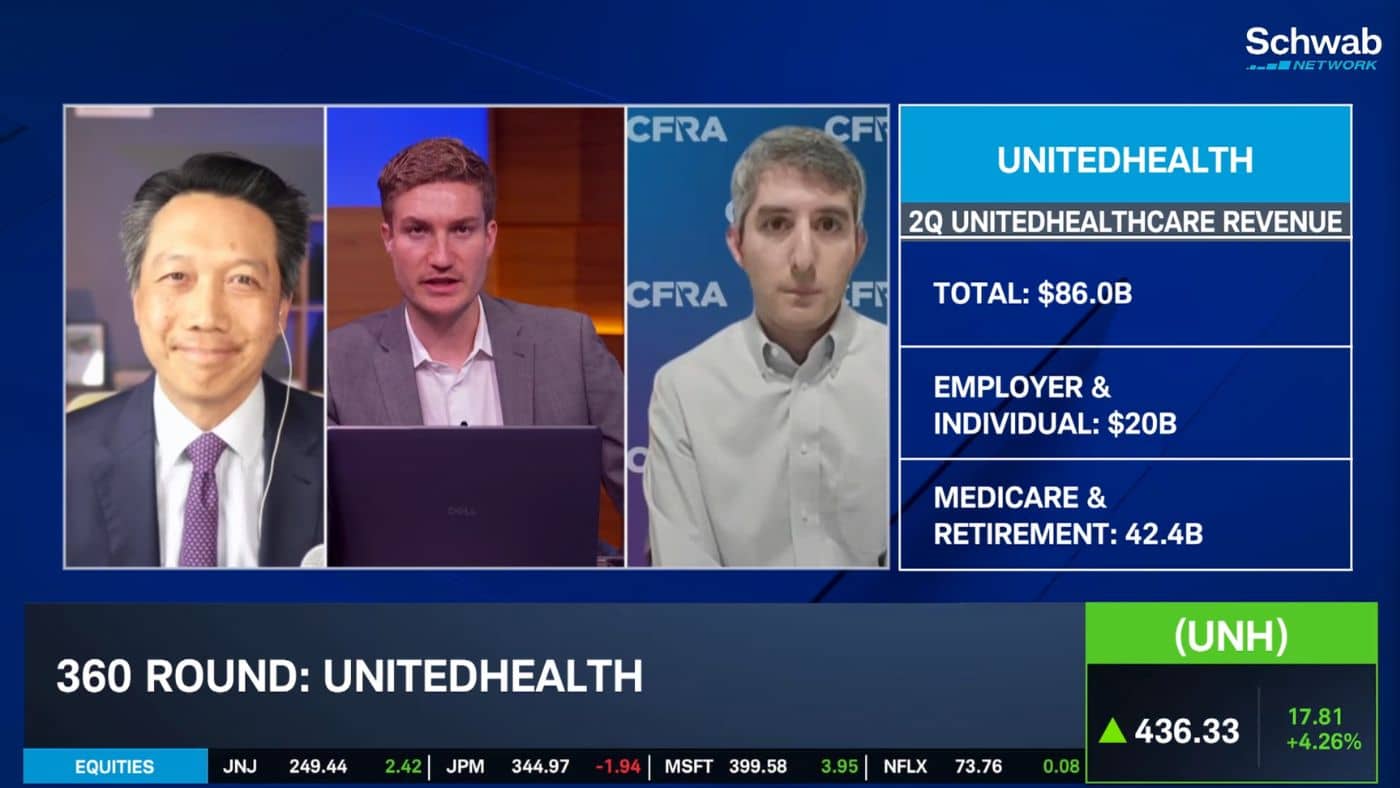
Runnymede Capital Management Managing Partner Andy Wang recently joined Alex Coffey on the Schwab Network, alongside CFRA Senior Equity Research Analyst Daniel Rich, to discuss UnitedHealth Group's second-quarter earnings and what they reveal about the company's turnaround.
While the headlines focused on an earnings beat and higher guidance, the conversation centered on the underlying drivers of the company's improving performance—and what investors should continue watching.
Looking Beyond the Headline Numbers
UnitedHealth reported earnings that significantly exceeded Wall Street expectations while raising its full-year earnings outlook to nearly $20 per share.
For Andy, however, the earnings figure itself wasn't the biggest takeaway.
“I would go as far as saying that the most important number today wasn't earnings. It was medical costs.”
For health insurers, success ultimately comes down to one critical question:
Can the company accurately manage healthcare costs?
Last year, rising medical costs pressured profits across the industry. This quarter, UnitedHealth showed meaningful progress, with its medical cost ratio improving to 86.7%, well ahead of Wall Street's expectations.
As Andy explained during the interview:
“Management didn't say that healthcare suddenly got cheaper. They said they're simply doing a much better job managing those costs.”
That's an important distinction.
The improving results aren't being driven by a friendlier healthcare environment—they're being driven by stronger execution.
AI Is Becoming a Business Advantage
Another topic discussed during the segment was artificial intelligence.
While many companies mention AI during earnings calls, investors increasingly want evidence that it's producing measurable business results.
Healthcare is one of the most operationally complex industries in the economy. Even modest improvements in efficiency can have a meaningful impact on profitability.
UnitedHealth is using AI to improve administrative processes, streamline workflows, and operate more efficiently.
As Andy noted:
“AI winners won't just build the technology. They're also going to use it to run better businesses.”
For investors, that's an important shift in thinking.
The long-term winners may not simply be the companies developing AI—they may also be businesses that successfully deploy it to improve margins and strengthen their competitive position.
One Metric Still Deserves Close Attention
Despite the encouraging quarter, Andy also highlighted an important metric investors should continue monitoring:
Membership.
UnitedHealth has intentionally reduced participation in less profitable Medicare Advantage and Affordable Care Act plans while raising pricing across portions of its business.
That strategy has resulted in lower membership but stronger profitability.
As Andy explained:
“Investors are rewarding a healthier business, not necessarily a bigger one.”
He added:
“Wall Street likes the tradeoff right now because management is choosing profitability over market share.”
So far, investors have embraced that strategy.
The next phase of the turnaround, however, will require demonstrating that the company can return to sustainable, profitable growth once the restructuring efforts are complete.
The Bottom Line
At Runnymede Capital Management, we believe successful investing means looking beyond the headline earnings number.
Quarterly results matter, but understanding why those results improved is often far more important than simply reacting to an earnings beat.
UnitedHealth's latest quarter suggests management is making meaningful progress through better cost management, disciplined execution, and thoughtful investments in technology.
The story isn't simply that earnings were better than expected.
It's that the underlying business appears to be getting stronger, and that's what long-term investors should be watching.