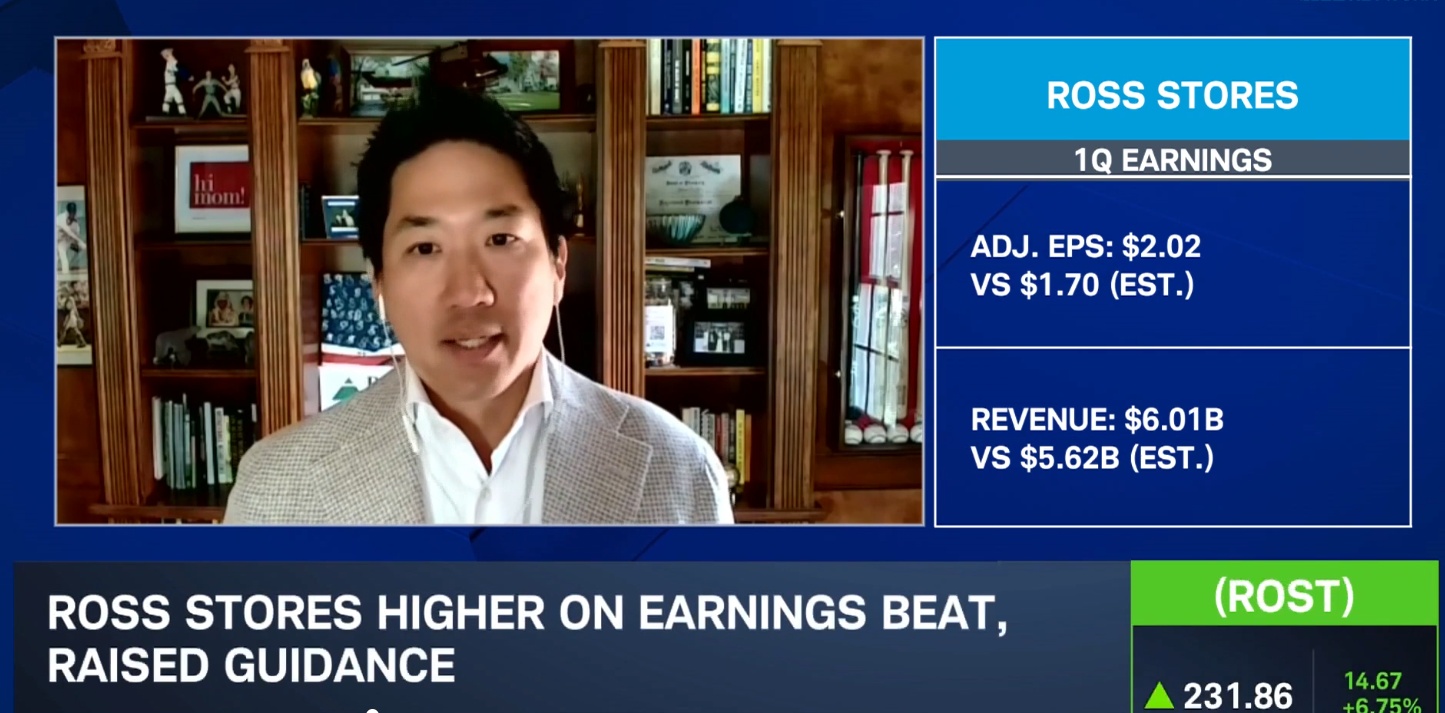
In a recent appearance on Schwab Network's the Trading 360 with Jenny Horne, Chris Wang provided expert insights on Ross Stores (ROST) 1Q earnings results.
Explosive, Transaction-Led Comps: Ross delivered a massive +17.0% comparable store sales growth, far outpacing consensus estimates of ~9.0%. Crucially, this growth was driven by an increase in actual customer transaction counts and traffic rather than inflation or higher pricing. I would note that comps get tougher in the fall as they lap higher traffic growth from their initiatives; but they should continue to outpace their peers.
Management noted that Ross is increasingly receiving “first calls” from vendors. Due to outstanding product availability in the marketplace, the company is gaining access to higher-tier, premium brands, which acts as a powerful forward tailwind for their merchandising. They still have many levers to pull…
Sustainable Operational Flywheel: The key takeaway is that the new management team led by CEO Jim Conroy is delivering on its deliberate shift away from Ross’s historical, highly conservative risk-management profile toward an “entrepreneurial growth orientation.” Under this new vision, buying and operational teams are being given the flexibility to experiment with higher-tier brands, modernize marketing digitally, and implement in-store structural changes like self-checkout. And the results are showing up in a big way, Ross Stores is driving this growth efficiently without having to aggressively “buy” traffic through expensive media spend.
Strong Forward Guidance: Proving that the momentum isn't entirely short-lived, Ross issued a solid F2Q comp guidance of 6% to 7%, giving analysts confidence in the durability of their demand trends heading into the summer.
Rising Fuel Costs: Higher fuel costs were explicitly cited by management as an incremental operational headwind that the company is actively having to manage and offset.
This is an issue for the company in higher freight and distribution costs; and its consumers are also facing higher fuel costs which means less money for discretionary spending. Walmart just said that people are putting less fuel in their cars so they have money to spend on goods.