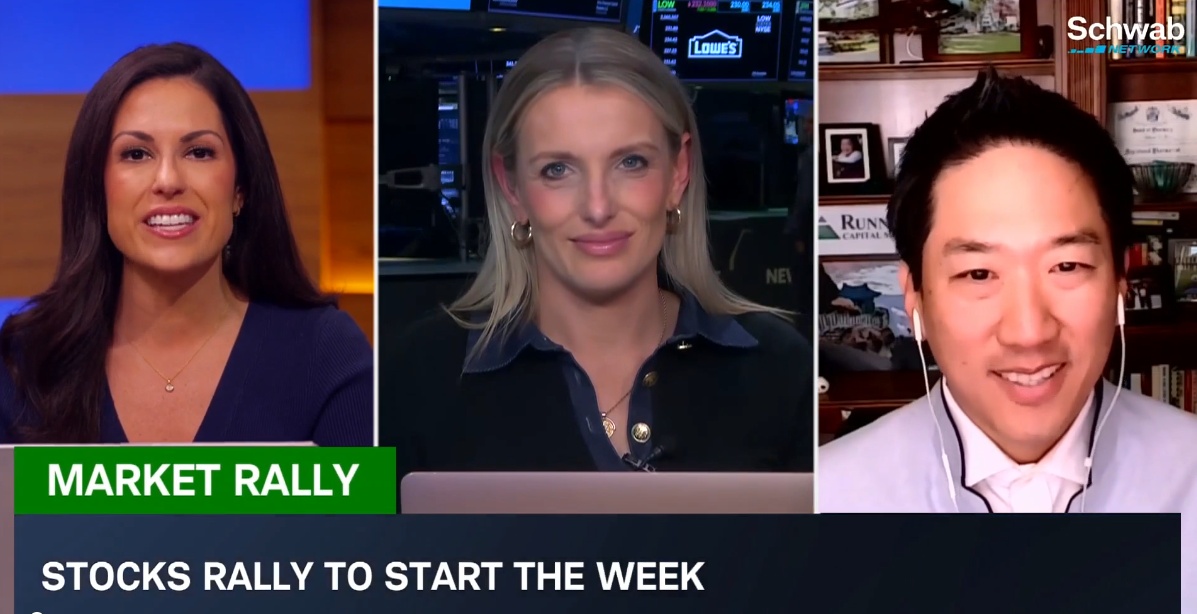
In a recent appearance on Schwab Network's Market on Close with Marley Kayden and Sam Vadas, Chris Wang provided expert insights on Warby Parker, Keurig Dr. Pepper and Kroger.
Keurig Dr Pepper (KDP)
Less than a decade after they merged, Keurig and Dr Pepper are getting ready to split back up, and that’s what makes this story interesting. Keurig Dr Pepper bought JDE Peet’s, the owner of Peet’s Coffee, and closed the deal in April. That put Keurig’s North American single-serve leadership together with a coffee portfolio that includes Jacobs and L’OR and sells in more than 100 markets.
The plan now is to separate into two companies: a global coffee business, and a North American beverage business built around Dr Pepper, Canada Dry, 7UP, Snapple, and faster-growing energy drinks like Ghost and Bloom, with a target by the end of Q1.
Why do investors care? Because each piece gets judged on its own story. And the beverage side isn’t waiting around: last quarter, U.S. refreshment beverage sales grew nearly 11%, mostly from selling more drinks, not just raising prices. Coffee becomes a global platform with real scale. The stock has already outpaced the market this year, so people are noticing, but a break-up is a classic catalyst because it gives investors something new to price in. It’s a staples stock with an actual storyline.
Kroger (KR)
Here’s a turnaround story with a great casting twist. Kroger just did something it had never done in 143 years: it hired a CEO from the outside, bringing in Greg Foran in February after a failed Albertsons merger and nearly a year without a permanent chief. And he’s not just any outsider. Foran ran Walmart’s U.S. business, where he delivered 20 consecutive quarters of comparable sales growth
What’s his plan? Back to basics. Sharper prices, a better in-store experience, and more private-label products.
The big news last month from Kroger was the fact that the company plans to cut roughly 3,000 corporate roles over the next three years as it brings AI into its workflow, removing duplicated work so decisions get made faster. The CEO says the savings will go toward cutting prices and investing in in-store employees, and the company has outlined a multibillion-dollar plan to fund better prices through savings and fewer promotions. It’s a hard moment for the people affected, but the logic for shoppers and investors is simple: in a price-sensitive grocery market, the winner is whoever can lower prices without hurting profit, and Kroger’s new long-term targets call for steady growth in sales and earnings through 2029
Warby Parker (WRBY)
Remember Google Glass? A decade ago, Google tried to put a computer on your face, and it flopped. It looked like a gadget, and nobody wanted to wear it. This week Google gets its second shot, and this time it brought a partner that knows what people actually want on their faces: Warby Parker.
On Thursday, November 12th, Warby Parker opens pre-orders for its first intelligent eyewear collection, built with Google and Samsung. It runs Google’s Gemini AI, with a camera, microphones, and speakers tucked into frames that look like regular glasses. You can get hands-free translation, directions, and photos without reaching for your phone. And they come in prescription and non-prescription versions, which matters because millions of people already wear glasses all day. This may be the first AI eyewear pitch built for them.
Here’s the part I like as an investor: distribution. Most tech launches mean a website and a return window. Warby Parker has 364 stores where you can try them on, get fitted, and walk out wearing them, with deliveries starting in time for the holidays. Management thinks this could be a step change for the business. Google has put real money behind it, and this is only the first collection.