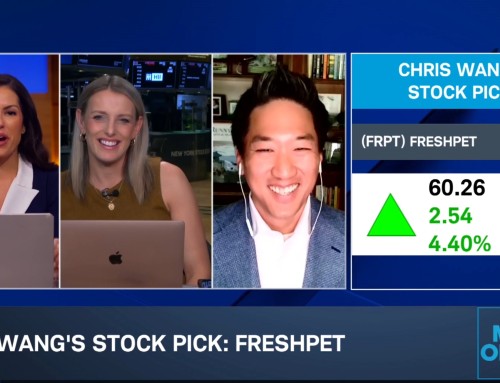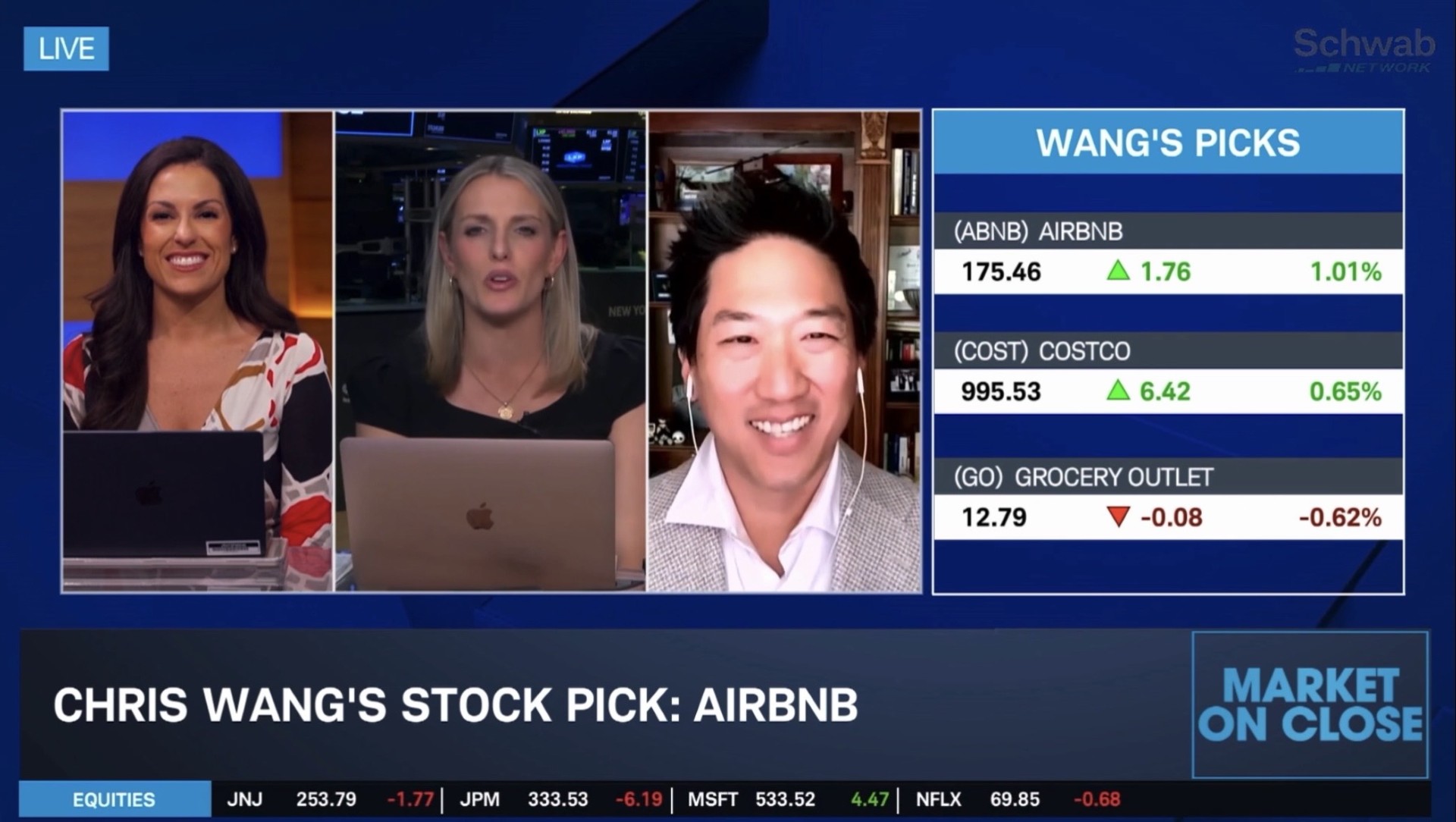
In a recent appearance on Schwab Network's Market on Close with Marley Kayden and Sam Vadas, Chris Wang provided expert insights on Airbnb, Costco, and Grocery Outlet.
Airbnb
Everyone’s worried about what AI agents will do to online travel, and for parts of it, they should be. Think about booking a flight. You tell an agent, ‘get me to Chicago Thursday, cheapest option,’ and you don’t much care which seat you get. Same with a rental car. Those products are interchangeable, so the agent just hunts for the lowest price, and the middleman gets squeezed.
Lodging is a completely different animal. Picture an agent finding you a $300 apartment. Which neighborhood? Is it walkable? Is it quiet at night? Does it have the kitchen, the balcony, the natural light? Two $300 listings can be wildly different experiences, and you can’t judge that from a price tag. You have to see the photos. It’s the same with hotels. People want to look before they commit, and that kind of judgment is hard for an agent to replace, at least for now.
That’s Airbnb’s cushion. And it isn’t standing still. It’s bringing on more hotel inventory, so whether you want a neighborhood apartment or a boutique hotel, you can find the right place at the right price in one spot. Analysts expect earnings to grow about 30% this year, and the next test comes November 5th.
Grocery Outlet
You know the feeling of walking into a TJ Maxx. You came in for one thing, and you leave with a bag full of brand names you recognize at prices that feel like you got away with something. Now picture that in the grocery aisle. That’s Grocery Outlet. All of us are tired of going to the neighborhood grocery story and you may just get two bags of groceries and it still costs $100. Consumers are desperate for a better deal.
But a treasure hunt only works if there’s treasure. For a stretch, Grocery Outlet drifted from what made it special. Fewer of those jaw-dropping brand-name deals made it to the shelves, and sales slipped.
So management went back to basics. They reached out to more brands that need to move inventory, sped up deliveries, and upgraded their systems so great finds hit the shelves faster. They sharpened the ‘extreme value’ message so shoppers see the savings the moment they walk in, and they refreshed stores with clearer layouts and signage. They gave the independent operators who run each store better tools to run it well. And they made a hard call: they closed 36 underperforming stores to focus on the winners, while still opening new ones.
It’s working, early. Customer traffic is growing again, the sales decline has narrowed to nearly flat, and management raised its outlook after the last report. It’s not a finished turnaround, but you can see the direction change, and investors have noticed. The next chapter comes November 3rd.
Costco
Here’s what surprised me about Costco. It has a youth movement. More than a quarter of its members are now under 40, the generation everyone assumes only shops on their phones. Costco figured out how to meet them there. You can now get same-day delivery through Instacart, DoorDash, and Uber Eats, and the app traffic is surging. They aren’t abandoning the warehouse. They’re giving younger shoppers more reasons to walk into it.
And with worries growing that the AI trade could unravel, and economic growth expected to slow into 2027, investors are asking where to hide. Costco is a good answer. When budgets get tight, people don’t stop buying groceries, gas, and household basics. They look for where to buy them for less, and that’s Costco’s entire pitch. On top of that, members pay up front and renew year after year at remarkable rates, so a big chunk of revenue shows up on schedule no matter what the headlines say. You saw it last Friday: the Nasdaq dropped more than 2%, and Costco finished higher. That’s what a defensive stock looks like.