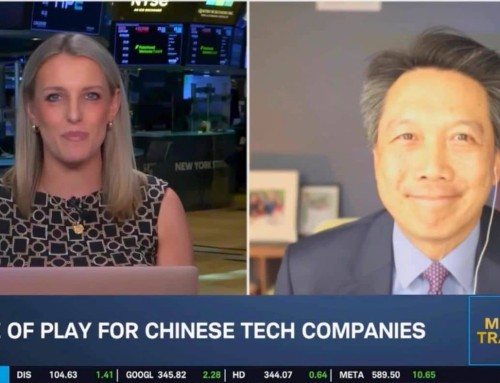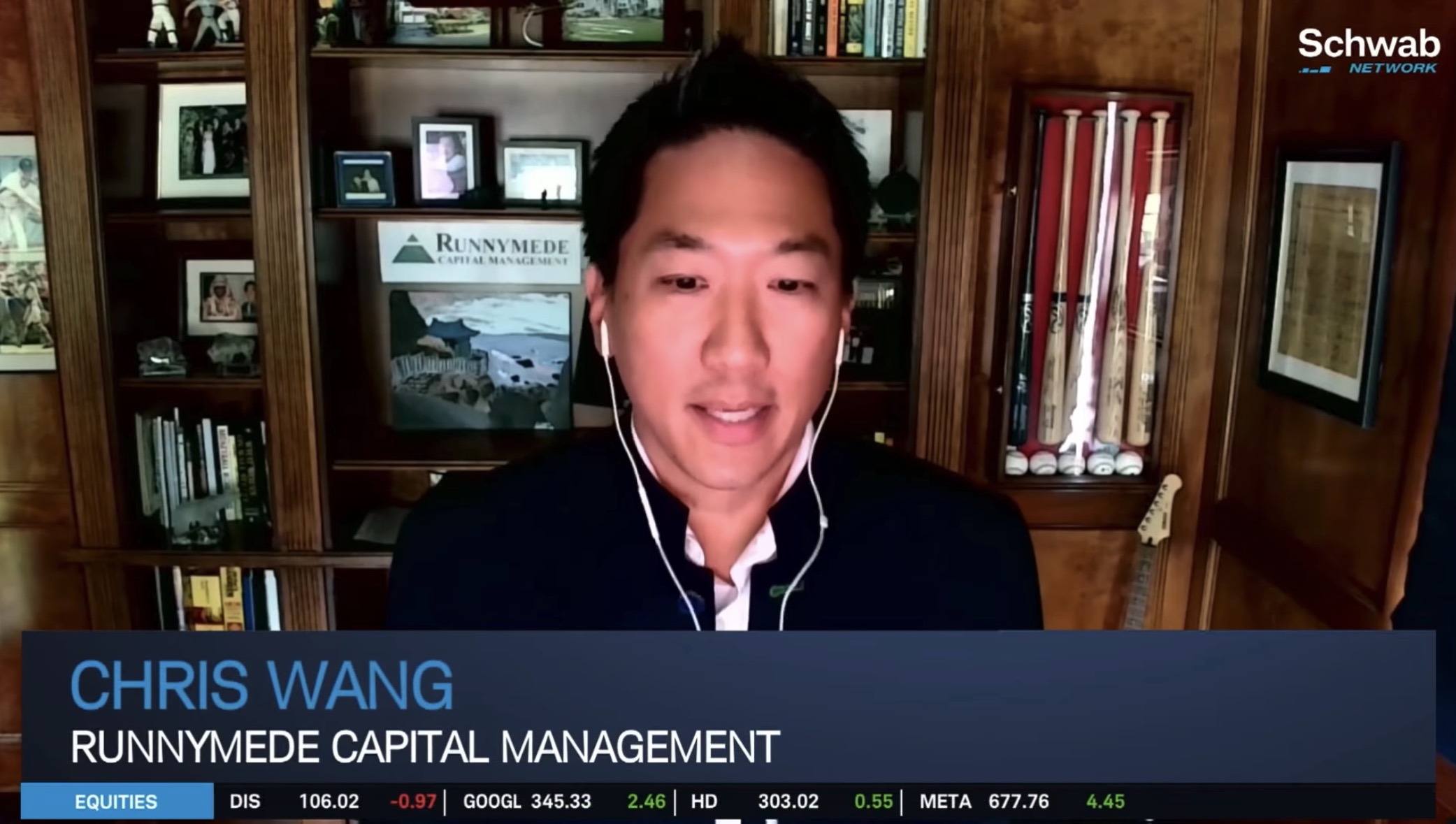
In a recent appearance on Schwab Network's Next Gen Investing with Alex Coffey, Chris Wang provided expert insights on Shopify, Meta and Palantir.
Shopify (SHOP)
If you want to know where the AI shopping story is actually being written, it's not with the chatbots — it's underneath them, at Shopify. While everyone argues about whether ChatGPT or Google ends up owning how people shop with AI agents, Shopify already built the infrastructure those agents plug into. Its Catalog is the structured product data AI agents pull from to understand what a merchant actually sells, and its checkout is increasingly showing up as the preferred rail when those agents complete a purchase on someone's behalf. It’s highly inefficient for AI to go and browse every website; agents will effectively plug into Shofiy’s catalog and other major retailers for a fast efficient solution.
AI-driven traffic to Shopify stores has tripled in the past year alone, which tells you merchants are already seeing real demand arrive through AI channels, not just curiosity.
Investors realized Shopify isn't competing to be the AI assistant people talk to. It's positioning to be the commerce layer underneath every one of them — Google's, OpenAI's, Meta's — so that no matter which AI agent wins the assistant war, the transaction still runs through Shopify.
Meta (META)
Every other assistant in this space has been a chatbot with better manners — you ask, it answers. Muse is Meta's attempt to leapfrog that entirely: it's an agent that runs on its own dedicated cloud computer, can log into your accounts, and actually executes multi-step tasks like booking a tennis lesson or negotiating a lower cell phone bill
This is the product Zuckerberg has been building toward in his broader AI push, and it puts Meta squarely in a race against OpenAI, Google, and Microsoft over who controls the assistant that actually acts on your behalf. In a recent video, Mark Zuckerberg said that Muse will make and save you money
Meta has a built in advantage over OpenAI and Anthropic as it has monthly active users of close to 4 billion users; and it knows their habits and behaviors.
Palantir (PLTR)
Companies don't just want AI; they want control over their own data and logic.” Enterprise demand is shifting toward “sovereign AI”—where businesses balance open-source, smaller models, and frontier models without handing their IP over to a single tech giant. Palantir is uniquely positioned to capture this demand by embedding AI directly into complex customer workflows.
Here's a great real-world example: Hexion, a specialty chemicals maker, used Palantir to connect procurement, production, and customer demand into one unified system — so for the first time, the business could see how a problem in one area ripples through to everything else. Then they layered in AI agents that watch inventory and delivery schedules around the clock, automatically expediting orders when demand spikes. Humans still make the final calls — the AI just catches problems before people would even notice them. That drove a $300 million EBITDA improvement over three years.