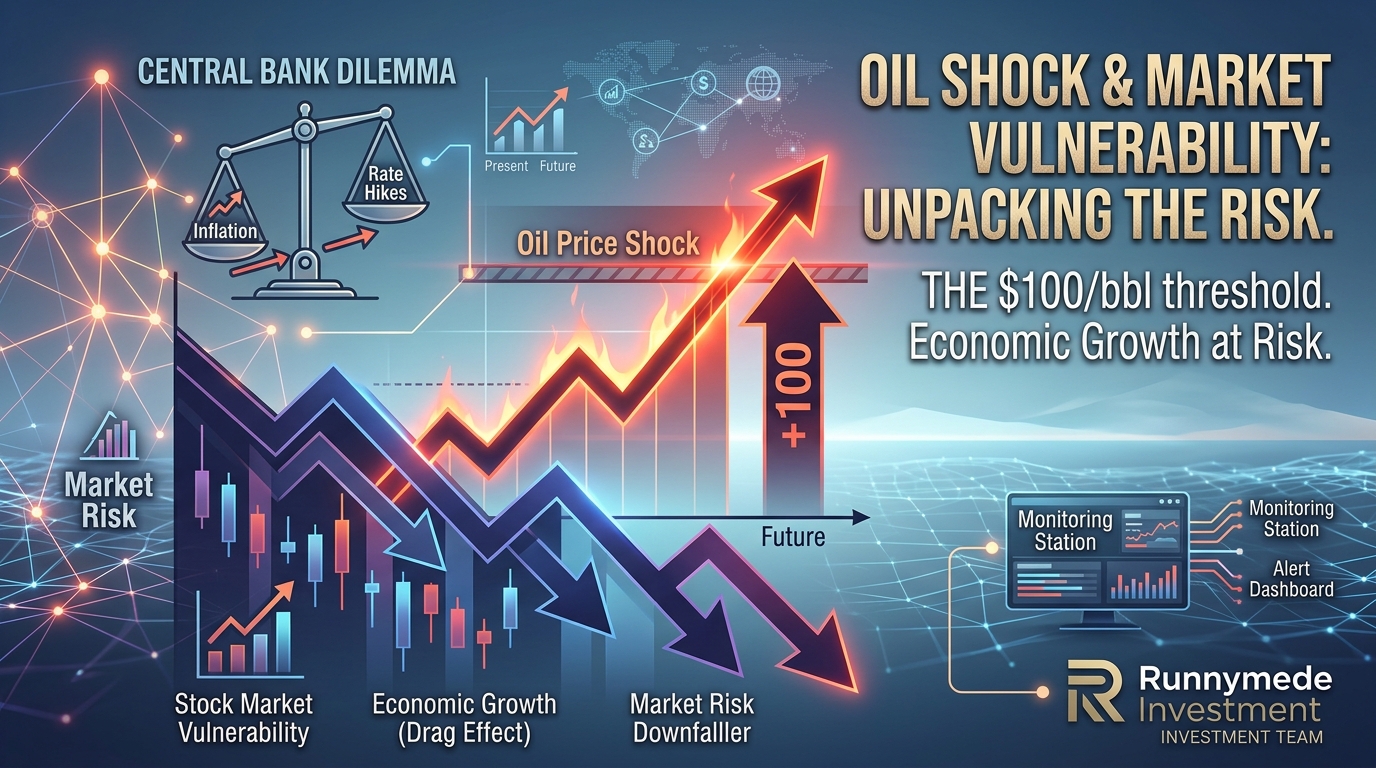
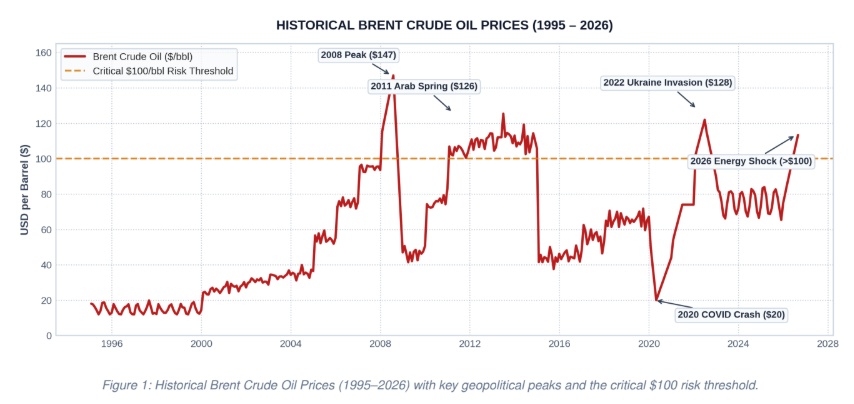
Crude oil is the lifeblood of the global physical economy. Historically, sharp increases in Brent crude above $100 per barrel have often coincided with greater economic and market instability. As demonstrated in the chart below, major oil spikes have preceded or accompanied economic realignments and market drawdowns—most notably the 2008 surge to $147 per barrel, the 2011 Arab Spring shock, and the supply disruption following Russia’s invasion of Ukraine in 2022.
The Trump administration has not outlined a clear timetable for ending the conflict with Iran. On Wednesday, President Trump predicted, “Right after the election, oil prices are going to be tumbling downward.”
Primary Risks to the Stock Market
Sustained oil prices above $100 per barrel could disrupt equity markets through several channels:
- Corporate Earnings Squeeze: Non-energy sectors may face an immediate margin shock. Transportation, manufacturing, consumer discretionary, and chemical industries encounter higher input and freight costs. Historically, every $10 increase in crude oil knocks ~1.2% off S&P 500 aggregate earnings growth.
- Valuation Multiple Compression: Higher energy prices can increase headline inflation and put upward pressure on benchmark bond yields. As discount rates rise, equity Price-to-Earnings (P/E) multiples—especially for growth and technology stocks—may come under pressure.
- Demand Destruction & Consumer Squeeze: Higher prices at the pump act as a direct “tax” on consumers, leaving less money available for discretionary spending and potentially slowing retail sales and broader economic growth.